
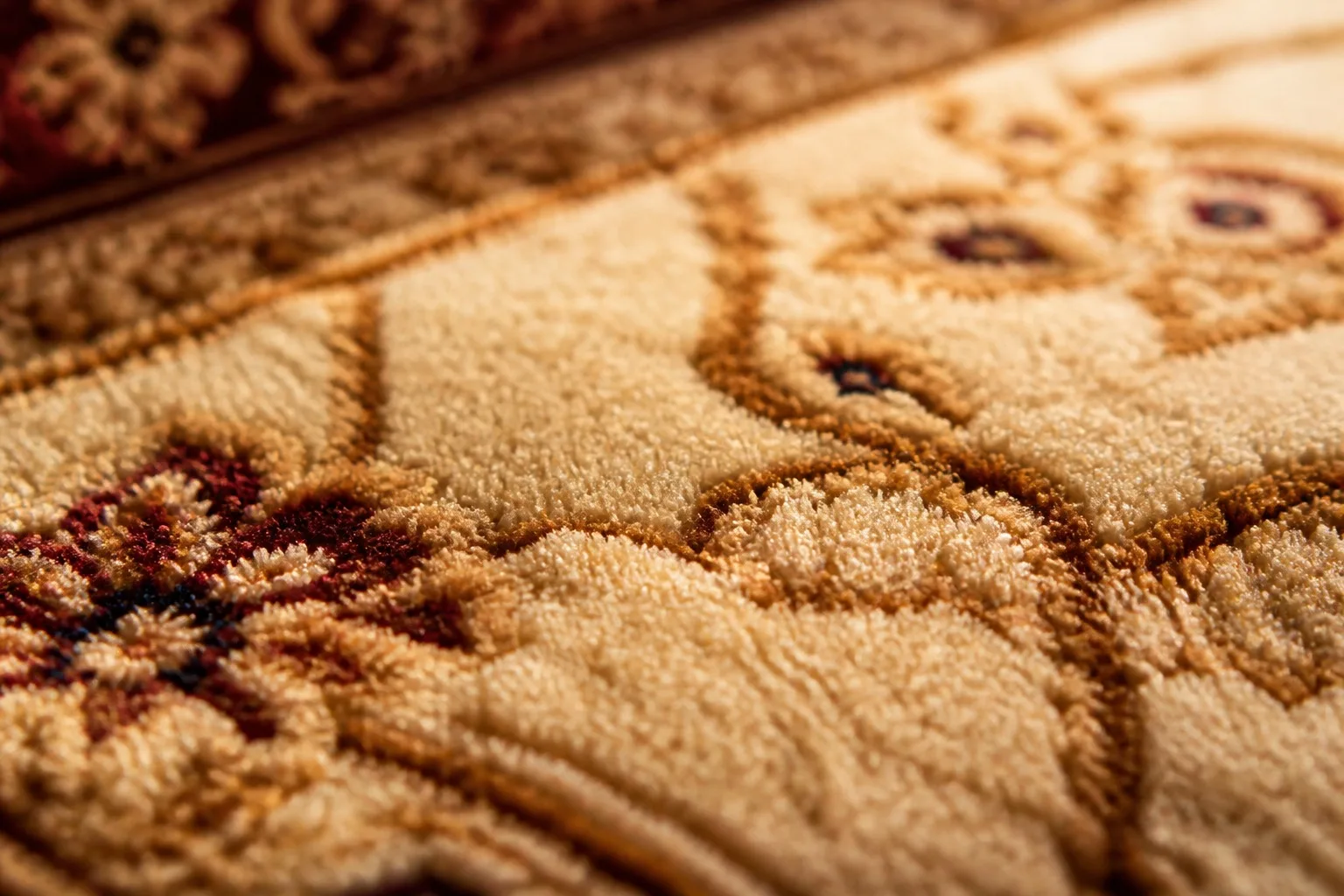
The yarn decides how a mosque carpet feels under the forehead, how long it lasts and how it cleans. Here is how wool, acrylic and polypropylene compare.
Two mosque carpets can look identical in a catalogue and still differ by a decade in lifespan. Most of that difference comes from the yarn. Here is how the three common materials compare.
| Wool | Acrylic | Polypropylene | |
|---|---|---|---|
| Comfort | Highest; springs back after prostration | Soft, close to wool | Firmer, less cushioning |
| Lifespan | Longest | Long, with good density | Shortest |
| Stain and moisture | Good, needs gentle care | Good, easy to clean | Excellent, does not absorb water |
| Colour | Rich, ages evenly | Bright, strong colourfastness | Good |
| Cost | Highest | Mid-range | Most economical |
Wool mosque carpet
Wool is a natural, resilient fibre. The pile recovers quickly after it is pressed down, it regulates humidity, it doesn't build static and its colour matures evenly over the years. It costs more and prefers gentle cleaning, but for a large central mosque that won't be re-carpeted for many years it is the strongest long-term investment.
Acrylic mosque carpet
Acrylic is the synthetic yarn that comes closest to wool. It is soft, takes bright colours well, resists moths and cleans easily, at a lower price than wool. That balance makes it the most popular choice for neighbourhood mosques and Islamic centres. Under very heavy traffic it can wear sooner than wool, so pile height and weaving density matter.
Polypropylene mosque carpet
Polypropylene is the budget option. It doesn't absorb water, so stains stay on the surface and damp basements are not a problem. It is firmer underfoot. It suits temporary prayer spaces, entrance areas near the wudu room and projects with a tight budget.
What matters as much as the fibre
- Weaving density: more tufts per square meter means a fuller carpet that resists crushing.
- Pile height: medium, dense pile gives the best balance of comfort and stability during prostration.
- Backing: a stable, non-slip backing keeps rows straight and stops the carpet rippling.
Our rule of thumb
Wool for the main prayer hall of a large mosque, acrylic for most community mosques, and polypropylene for entrances, basements and temporary spaces. Many projects combine two materials in the same pattern.
Frequently asked questions
Is wool or acrylic better for a mosque carpet?
Wool is more resilient and lasts longer; acrylic is softer on the budget and easier to clean. For a large central mosque, wool is the stronger long-term choice; for most community mosques, acrylic is the best balance.
Is polypropylene carpet suitable for a mosque?
Yes, for entrances, basements, temporary prayer spaces and tight budgets. It doesn't absorb water, but it is firmer and less comfortable during prostration.
Can one mosque use two materials?
Yes. Many mosques use wool or acrylic in the main hall and polypropylene near the entrance, woven in the same design so the space still looks unified.
Compare every model and its approximate price per m² on our Turkish mosque carpet page, or read how to measure your prayer hall before you ask for a quote.